• Skip to main content
  • Skip to primary sidebar
  • Skip to footer

Human Movement

Injury Rehab and Sports Performance Training, City of London

  • About
  • Process
    • Our Process
    • Can I help you?
  • Methods
    • Muscle Activation Techniques
    • Resistance Training
  • Programmes
    • In person programme
    • Online programme
  • Resources
    • 9 key principles to help you recover from pain and injury
    • Everything you need to know about exercise at 50 and beyond
  • Blog
  • Contact

Two reasons why your injury rehabilitation is not working.

January 13, 2014 by Paul

I recently assessed a former professional football player who was still having pain in his knee following ligament damage sustained 6 years ago.

He accurately summed up the problem with the rehabilitation he had received so far, “every physiotherapist starts me with a squat, I can’t squat without pain.”

In that one sentence he had described one of the biggest issues with rehabilitation today, the starting point is usually an exercise that is beyond the client’s current capabilities.
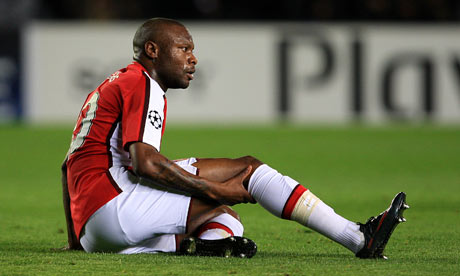
Following injury a number of changes occur within the muscular system. The most significant of these in terms of a return to exercise is muscle inhibition and the movement compensation it causes.

When there is trauma to an area your Central Nervous System (CNS) responds by switching off muscles around the injury. Studies have shown that just one incident of lower back pain is enough to cause changes in the local back muscles. Researchers have also found the same effect at the knee.

So the first reason why your injury rehabilitation is not working is that the muscles affected by the injury have not been switched back on following the incident.

Once these muscles have been activated via Muscle Activation Techniques (MAT) exercise must be directed at them in the most specific way possible and at the appropriate intensity to avoid stronger muscles compensating for the weaker ones.

This is the second reason your injury rehabilitation is not working.

In the case of the footballer every rehab professional had tried to get him to squat before he could bend and extend his knee effectively. Metaphorically speaking, to run before he could walk.

Filed Under: Rehabilitation, Training

Get a grip on chronic pain.
Why your fingers wrinkle in water.

Primary Sidebar

Not making progress with your rehab?

Subscribe below and find out how to get moving with our FREE 21 page guide.

9 key principles to help you recover from pain and injury pdf cover

Everything you need to know about exercise at 50 and beyond.

Subscribe and receive our 45 page guide FREE.

Everything you need to know about exercise at 50 and beyond pdf cover

Categories

Recent Posts

  • Why your daily exercises help, but don’t keep the pain away  January 18, 2026
  • Why resistance training succeeds where physiotherapy sometimes fails January 12, 2026
  • Why education and nervous system training matter for back pain January 1, 2026
  • When knee pain has nothing to do with your knee (and what else it might be) December 16, 2025
  • How to fix lead hip pain in golf: a PGA pro’s case study December 2, 2025

Footer

CONTACT

Human Movement
30 Cannon Street
London, EC4M 6XH

+44 020 7183 1164
paul@human-movement.com

BLOG

  • Why your daily exercises help, but don’t keep the pain away  January 18, 2026
  • Why resistance training succeeds where physiotherapy sometimes fails January 12, 2026
  • Why education and nervous system training matter for back pain January 1, 2026

FOLLOW

SUBSCRIBE

Privacy | Cookies | Terms