In this post, we look at neck pain in fighter pilots, and what an exercise programme with the Royal Australian Air Force (RAAF) shows about the need for precision in rehab.
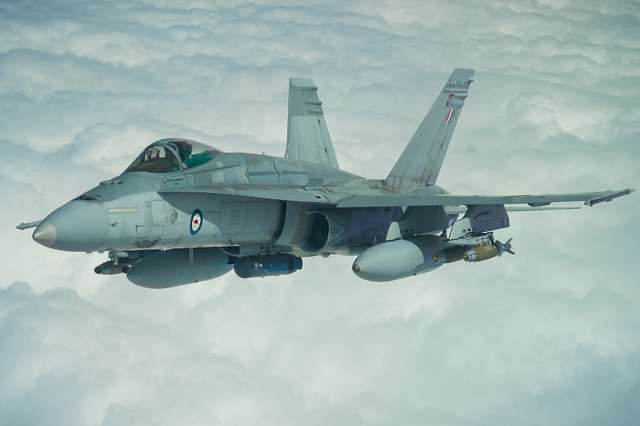
Neck and back pain are so common among fighter pilots that they’re seen as part of the job. As Wing Commander Carlos Almenara of the RAAF puts it, it “has been a problem as long as we’ve had high-G aircraft, it’s just been one of those problems that’s been accepted culturally as a part of flying fast jets.”
What high G does to the neck
“High-G” refers to the forces created when these aircraft manoeuvre. In normal life, and in level flight, you experience 1G. In a hard turn or steep climb, a modern fighter pilot can experience up to 9G, which is nine times their normal body weight.
The neck carries more of this load than any other part of the body. Head and helmet together weigh around 7–8 kg, and night-vision goggles add more. At 9G, that becomes the equivalent of more than 60 kg sitting on the neck, often while the pilot turns their head to track another aircraft.
These peaks come in short bursts. Pilots repeat them sortie after sortie, on top of long hours in a fixed, cramped posture.
Pilots have strong necks: mostly
You’d assume pilots have strong necks. Testing at 76 Squadron, RAAF Williamtown, using David Health Spine Concept machines, confirmed this in every direction but one.
In Almenara’s words: “What we found was, in most tests we were above average in strength from the start. However, in neck rotation we were significantly weaker than the average population.”
The testing uncovered a specific weakness in a movement that hadn’t been routinely tested or trained.
The Fighter Fit programme
Each pilot followed a plan in three phases:
- Conditioning. Baseline tests set each crew member’s risk category and target areas. Pilots did not all follow the same generic programme.
- Maintenance. Once crews moved into the high-G phase of training, a monitoring app tracked pain, sleep, fatigue and soreness to catch problems early.
- Rehabilitation. Where it was needed, rehab started from a documented baseline rather than a guess.
The results, according to Almenara: “That was successful, and since we’ve done that, I haven’t seen a trainee suspended here for any physical-related problems.”
So what can we learn from this?
You may not be a fighter pilot (or perhaps you are), but the lessons apply to anyone dealing with pain or going through rehab.
Don’t assume. Test
Being able to do a demanding activity doesn’t mean you’re strong in every direction. The only way to know is to measure.
Strength is specific to a movement and a direction
Someone can be strong overall and still have a weak link. The pilots were above average in most neck directions but below the general population in rotation.
A mismatch between demand and capacity can contribute to pain
When the demands placed on a part of the body regularly exceed what it can tolerate, pain often follows. For a pilot, the demand is 9G. For someone deconditioned, it might be climbing the stairs.
Target the specific weakness
General exercise has its place, but it can miss the gap. Once testing finds a specific weakness, train that movement directly and progressively.
Rehab is ongoing
The pilots were monitored regularly once they entered the high-demand phase. Rehab is often presented as a course you finish. In reality, capacity needs checking and maintaining, especially if you’re returning to sport or to demanding work.
Leave a Reply